To get water in Probably Stolen, display the Buying Water sign to attract sellers, then test and treat their water before resale. Later supply options include Mr. Wild's pipe upgrades and Moisture Farms, although obtaining water does not automatically give you the quality you need. The game's official description requires testing and filtering, while the equipment you need depends on the contamination left in your supply.
Get your first water from visiting sellers
Community advice identifies the Buying Water sign in your display window as an early way to find water for purchase. The sign can attract people offering water, so use those visits as opportunities to build a supply for treatment and resale. It improves your chances of meeting sellers rather than guaranteeing a delivery every day, so an empty stretch does not establish that the sign is broken.
A visitor carrying an empty bottle may be a customer looking to buy your water, rather than someone bringing you a water supply. Community replies explain that these buyers bring containers in case you cannot provide enough of your own. Your starting circumstances also matter: the water merchant start includes a large plastic jug, but entering that business later does not give you the same jug free. Finding your first jug through trading can therefore depend on which opportunities appear.
For more chances to purchase treatment supplies, community advice recommends displaying the household-goods sign represented by toilet paper. Testing strips, purification tablets and simple filters belong to that goods category, making it relevant when you need to replenish those consumables. This offers another buying opportunity when you cannot rely on the retired water trader, without promising that a particular visitor will carry everything you need.
Test purchases and identify what remains
Use a testing strip by dragging it into the water source or container you want to check. Test water offered for sale before deciding what to pay, because community reports describe sellers offering mislabelled water. Identifying lower-quality water can let you buy it more cheaply and improve it for resale, but that trading approach does not establish a fixed profit on every purchase.
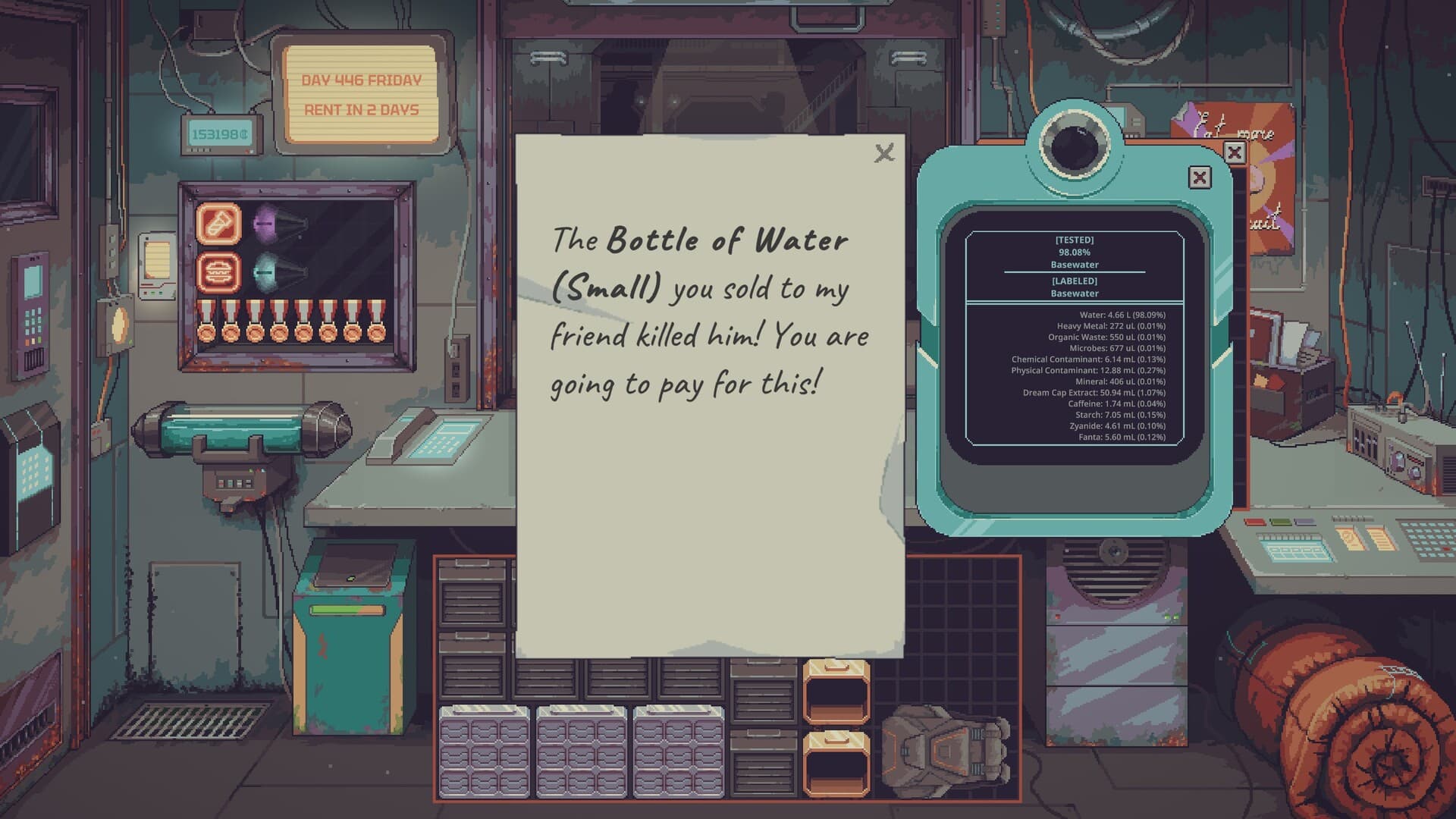
When a quality label stops improving, AquaScan can help you distinguish the contaminants that remain instead of guessing from the label alone. Community discussion specifically describes using it to identify chemical contamination left after other treatment. Players report finding AquaScan at Dr. Jackson's or from visiting hydroponic vendors, so check those opportunities without assuming it will always be in stock.
Use tablets, filters and UV for different jobs
The basic treatment sequence described in a guide begins by placing a purification tablet in a container and fitting a filter to the pitcher. Pour the untreated water into the pitcher, then transfer the filtered water into a separate container. This gives you a practical starting process, but tablets and a filter have cleaning limits and cannot guarantee high-quality water from every source. If the result disappoints, check that the filter still has durability and retest the water after treatment.
The video explanation assigns ordinary water filters to organic waste, mineral contamination and physical contaminants. UV lamps handle microbes, which means they serve a different purpose from that filter. If filtering leaves microbes behind, the water can remain basewater until you use treatment that addresses those microbes. Use the remaining contamination to choose the next tool rather than assuming another pass through the same equipment will solve everything.
A video demonstration upgrades purchased basewater to high-quality water with a UV lamp and filter combination. The presenter limits that advice to the purchased mixture shown and warns that homemade basewater may respond differently depending on its earlier treatment. Treat that combination as a route to test on suitable water, rather than a universal recipe for anything carrying the basewater label.
Connect pipes and run a powered purifier
Mr. Wild's upgrades provide a progression through gutterflow to rustwater on tap, giving you another way to obtain untreated water. The pipe connection supplies water, while purification equipment handles the separate job of improving its quality. Community guidance warns that tablets and a simple filter may need an additional treatment step for pipe water. A purifier machine is among the suggested options when the basic tools reach their limits.
In a video setup, a battery is moved from the bottle maker into the water purifier. A standard bottle is then filled with rustwater from the faucet and placed into the purifier for processing. Follow the complete setup by providing power and a container of water, rather than leaving the machine with nothing to treat. Processing time depends on machine performance and the batch, so do not assume a full jug will finish overnight.
Check the purifier's tooltip for its maximum purity before deciding whether its result matches your goal. A video explanation shows a maximum purity of 99.9% and says a purifier with quality of at least 100% can reach that pure-water result over time. Apply those figures with the machine condition described, and verify your own tooltip rather than treating them as an unconditional promise for every purifier.
Understand Moisture Farm quality before selling
Moisture Farms offer another source of water, but a basic guide describes their ghostwater output as dirty and needing filtration before sale. Do not equate having a collector with already having sale-ready high-quality water. Test its output and plan treatment around what it actually produces, rather than skipping purification because the water came from your own equipment.
Upgraded farm output is a separate case: a video reports high-quality water when the farm's quality reaches 100. Another demonstration describes pure-water production with Moisture Farm quality of 150 or above. Those are equipment conditions for the improved output, so they should not be applied to an unupgraded farm or used to assume every farm produces the same water.
Use biological treatment and keep batches moving
Gutter Tilapia provide a biological treatment option mentioned in both community advice and a video demonstration. The video places the fish in a recirculating aquaculture system, where they clean the water over time. Check progress with AquaScan rather than assigning the process a fixed completion time that the demonstration does not establish.
Once your purifier is producing the desired result, the demonstrated routine transfers treated water into the main storage containers. The emptied bottles are refilled with faucet rustwater and returned for another batch of purification. Keep track of those reusable bottles and the containers receiving the finished water, because adding machines still leaves you managing transfers and storage.