For a probably stolen zero money start, end the opening trading day, scavenge at the dumping ground, and sell what you bring back. Rock Bottom begins without money or items, but a recorded run shows that you can leave without a backpack and return with stock. That run eventually bought the shop, although its loot, customers, and prices are examples rather than guaranteed results.
Choose Rock Bottom and get through the opening day
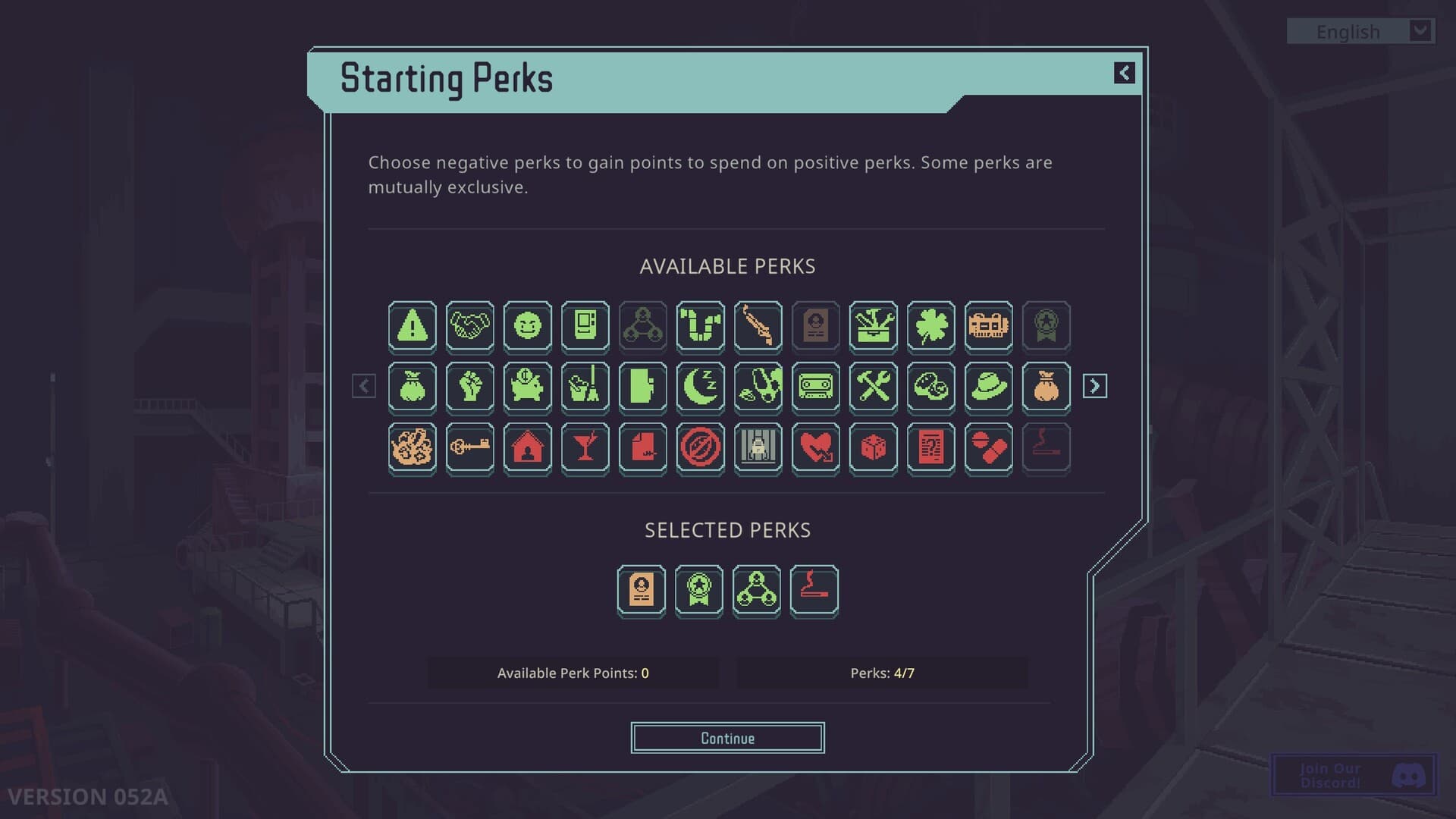
The demonstrated route uses Rock Bottom on Normal difficulty, with Proficient Scavenger, Short Sleeper, and Lucky selected. These are the settings of that successful run, rather than a mandatory combination for every attempt. Proficient Scavenger allows up to two additional searches per dumping-ground visit; the player describes seven attempts instead of the usual five. Short Sleeper prevents missing customers because of the previous night's after-hours activities.
When your opening visitors want to sell goods, having no cash prevents you from buying their stock. Both recorded openings encounter this problem, but the longer run continues instead of restarting. Dismiss the remaining customers, end the day, leave the store, and travel to the dumping ground. Although the departure interface offers backpack selection, the player goes out without one, so buying a bag is not a prerequisite for this opening.
Bring back your first stock without overextending
Without a backpack, the demonstrated character has two pockets available for the trip. The player brings back a bottle of Nudka and an efficiency module, leaving the items that do not fit behind. Use that as an example of working within your carrying space, rather than a shopping list of guaranteed finds. The important opening decision is which recovered items to carry home when you cannot take everything.
Searching carries a chance of minor wounds and a smaller chance of major wounds in the recorded trip. As the searches continue, the player notices the injury risk rising and chooses to return with the selected loot. You do not need to exhaust every available search before heading back. Once home, the player advertises the recovered Nudka and efficiency module in the shop window, preparing that stock for sale.
Turn recovered goods into cash
The first sale in the longer run comes from the scavenged Nudka bottle. Its displayed base value is 85, and the customer pays 98, which the commentary attributes to a 15% retail markup. This is a concrete example of converting recovered stock into spending money, rather than a fixed return for every item. Your own opening revenue depends on what you recover and the trades you actually complete.
Match your offers to what the visitor wants and can afford. In the recorded run, an inventor seeks materials, energy cells, tools, and modules, and also accepts wires. A tourist looking for a weapon accepts a lead pipe but will not buy unrelated goods. Another proposed sale exceeds a customer's available money, illustrating why a valuable item alone does not ensure an immediate sale.
Once you have cash, compare a wholesale offer with the cost of buying the goods separately. One demonstrated batch costs 102 instead of the ordinary total of 151, while a smaller purchase elsewhere does not receive that batch discount. Also weigh the risk of haggling: a customer leaves during one attempt. When the player urgently needs money or bandages later, accepting the available deal takes priority over risking another departure.
Protect the scavenging route and budget for services
Wounds can interrupt the very activity supplying your early stock. The recorded player becomes unable to scavenge while wounded, and untreated minor wounds later get worse. In a subsequent trip, using a bandage after a minor wound allows scavenging to continue. Together with the increasing search risk, these examples support returning before an extra search puts your next supply trip in jeopardy.
Carry upgrades become useful after sales provide money to invest. The player buys a small satchel from Dr. Jackson for 150, then uses its space for a toolbox and additional recovered goods. Later, the commentary reports a reduced injury chance with a flashlight, but another trip still ends in a wound. A bag expands what you can bring home, while the flashlight reduces risk without guaranteeing safe searches.
Shop services also compete for your limited cash. Skipping cleaning leaves garbage outside in the recorded run; after paying the janitor, the nightly report confirms cleanup and attractiveness rises. An unpaid power bill cuts electricity and leaves the shop on emergency lighting. Later power-block charging explicitly requires paid power service, so its charging benefit should not be treated as an expense-free source of income.
Keep rent money available and assess risky offers
Reserve cash for rent before committing everything to another purchase. The official description warns that rent keeps rising and that bad deals or confiscated stock can jeopardize the next payment. In the Normal Rock Bottom example, the player pays 200 credits for the first week and sees 209 due the next week. The player also turns away a seller near rent time, choosing available cash over more inventory.
Be cautious when an offer pays you to take something troublesome off a visitor's hands. A corporate waste manager offers 100 credits per barrel in the recorded run, but the accepted waste occupies space and later needs transporting to the dumping ground. Contraband brings a different problem: the official description associates it with raids and warns about confiscated stock. The recorded player refuses an offer when lacking hiding space and doubting that the goods can be sold quickly enough.
Expand only after the opening trade is working
Appraisal becomes an additional income source later in the demonstrated run, after the player is invited to join as an appraiser. Its service description promises a base fee plus a bonus linked to valuation accuracy. Examinations and certification can improve that base fee and unlock additional item types to appraise. This gives you a later opportunity to earn service income, but it is not a service automatically available at the empty-shop opening.
Smelting is another later investment rather than something the empty starting shop can immediately perform. The player buys a furnace, places an energy cell inside, adds ores, and obtains a metal ingot. Flux smelting agent is used to improve purity. For water trading, the later setup includes testing, filtering or purifying equipment, and moisture farms; the official description specifically requires water to be tested and filtered.
Read the daily news before treating a familiar commodity as a dependable purchase. The demonstrated run reports improved water availability and lower prices near an ice asteroid, then encounters a water shortage later. Those events explain why checking current conditions matters; they do not establish a timetable for every new game. The eventual shop-buying run mainly trades water, briefly trades medical supplies, and continues scavenging, showing a workable expansion path without establishing the fastest one.
Work toward the current buyout price in cash
Keep the distinction between valuable stock and spendable cash in view as you work toward ownership. The demonstrated shop initially costs 12,000 credits, but by the time the player reaches that cash threshold, the property price has risen to 13,850. Check the current quote instead of treating the opening price as a permanent target. The player eventually signs the deed and removes the rent burden, completing a successful Rock Bottom route.