Start with Apprentice on Cozy or Normal, inspect goods before buying, and reserve rent money before spending on production upgrades. Your larger goal in Probably Stolen is to earn enough to buy your shop on a dystopian space station before rising rent overwhelms the business. Build toward that purchase through ordinary trading first, then add production or overnight sales as your cash allows.
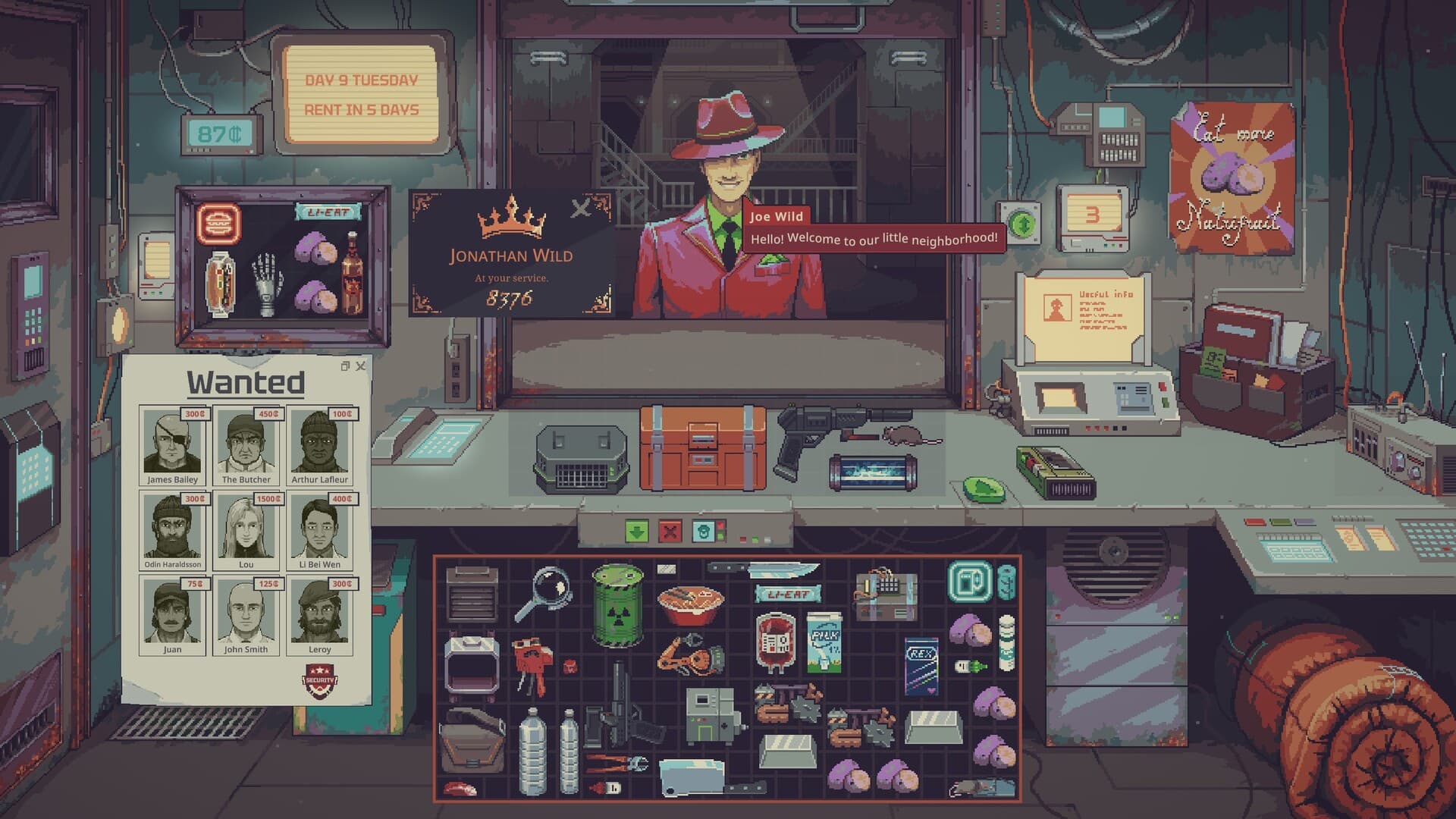
Choose a beginner start and learn the daily routine
Apprentice is the recommended first-run scenario because it supplies extra Credits, a Storage Bay, household goods, and food. That gives you stock to trade while learning the counter, without choosing a start built around a specialized production business. Select Cozy or Normal separately: your starting scenario determines your setup, while the difficulty setting is a different choice.
There are nine starting scenarios, including specialized approaches such as gunsmith, chemist, water merchant, fence, and farmer. Rock Bottom is also a starting scenario, so do not mistake its name for another difficulty setting. During the day, buy and sell goods and manage inventory; overnight, your options include scavenging, visiting contacts, and running machines.
Inspect stock before negotiating a purchase
Use the magnifying glass and handbook to examine goods before agreeing to a price. Cigarettes need visual inspection, rare items need appraisal, and weapons involve permits and modifications, so the right check depends on the product. Counterfeit packs, damaged injectors, and mislabeled water are reasons to examine the item itself instead of trusting the seller's description.
A genuine discrepancy gives you grounds to confront the seller and negotiate a lower buying price. An incorrect accusation costs reputation, so make sure you can identify the problem before challenging a deal. Treat inspection as part of earning money: avoiding an overpriced purchase matters alongside finding a customer willing to pay more than you spent.
Match your stock to customers and demand
Attracting suitable customers helps balance supply and demand, and your window or display-case stock can influence who comes in. Engineers favor modules and materials, Security customers seek weapons and ammunition, and upper-level buyers pay more for quality. Use those preferences when choosing what to display, especially when deciding which part of your inventory to put in front of buyers.
Watch for demand spikes such as weapon demand, medical shortages, and household relief drives. You can haggle for better prices or offer discounts, while higher reputation makes customers more willing to deal. For counter handling, patch 1.0.0.5 added the rebindable bell shortcut, B by default; holding it dismisses the current customer, matching the bell's hold action.
Test and label water before selling it
If you choose Water Merchant, your starting equipment includes testing gear, purification supplies, storage containers, and a Bottle Printer. Consult the Water Trading Manual and test each batch to establish its quality and identify contaminants before treatment. Use filters or purifiers as appropriate, then test again rather than assuming the treatment has produced the result you wanted.
Bottle the water with a label that matches its actual quality, and remove any Water Filter left inside a Water Pitcher before offering it. In patch 1.0.0.5, water customers were changed to explain that a filter must be removed instead of silently rejecting the pitcher. The same patch reduced the Water Purifier's price from 300 to 250, so that older price is outdated for this version.
Plan around rent before spending your earnings
Check the Calendar for the next payment and keep a cash buffer available for it. The reported Mark Up (Normal) schedule starts at 200 Credits, with the first payment on Day 7 and Landlord visits every seven days afterward. Rent rises, and some starting scenarios begin with higher bills, so use your own Calendar rather than applying that starting amount to every run.
Missing a payment after your Rent Grace has been exhausted ends the run. That makes available cash a separate concern from owning stock or machinery: keep enough money aside before committing earnings to another purchase. Expansion can unlock businesses, merchandise, and production opportunities, but confiscated goods or a bad deal can still leave the next rent payment out of reach.
Expand production in manageable steps
Choose machinery around the goods you intend to process: the Furnace turns scrap and ore into ingots, while the Bottle Printer makes bottles from bulk water. The Bottle Printer can be upgraded for larger sizes, and the Fridge can chill or freeze water and other goods. A wine setup also lets you ferment and age grapes into increasingly valuable bottles.
Machines depend on power, so a dead battery can stop production regardless of what you planned to make. Efficiency, performance, quality, and refinement modules can improve output, but some degrade or come with downsides. Upgrade gradually and consider the ability to run a machine alongside its purchase, keeping the rent buffer intact as you build the production side.
Use overnight opportunities without draining the shop
The dumping grounds offer scavenging opportunities for scrap, medical supplies, and tools, but no particular haul is guaranteed. Other overnight options include visiting special contacts and running your machines, giving you activities beyond the daytime counter. Choose those activities with your existing stock and production needs in mind, while remembering that machinery still depends on working power.
Once unlocked, Vending Machines can continue selling stock overnight after the shop closes. Add them when regular trading is stable, and avoid transferring so much inventory that you leave yourself short of trading stock or rent money. If you open loot crates, patch 1.0.0.5 makes their revealed contents final; reloading after increasing luck no longer generates a fresh selection.
Keep risky merchandise under control
Specialized businesses bring different problems: weapons attract inspections, chemicals involve addiction, water carries liability, and contraband attracts raids. Some trades also require heavy machinery and permits, so a new product line can add obligations alongside its earning potential. Consider those demands before branching away from the goods and equipment you already understand.
Stolen goods and contraband can be hidden from authorities, and bribery is an option if you are caught. Dedicated storage such as smuggler's bays is recommended, while exposed contraband or the wrong buyer can lead to inspections, sting operations, or Security reputation losses. Reputation can provide access and protection, but it can also attract danger, so increased standing does not remove the risks of questionable stock.
Save toward buying the shop
On Normal, the reported initial shop purchase price is 12,000 Credits, but it can increase during the run. Check the Calendar for the current value rather than treating the opening price as a fixed savings target. When the purchase option appears during a rent visit, you can buy the deed from the Landlord.
The Loan Shark offers a mortgage route, but that replaces rent pressure with repayments and still puts the shop at risk if you fall behind. Continue protecting your rent money while saving toward ownership, rather than treating borrowed money as an end to your financial obligations. Buying the shop in the full release provides an ending and a run summary that includes your most profitable sale and days survived.