To complete custom gunsmithing orders in Probably Stolen, supply a gun that meets every requirement listed by the buyer. Extra bonus conditions add credits, while service orders involve fitting parts to a customer's own firearm. The release-version guide also describes a separate payment rule for “Give me your best” orders, so check the kind of work requested before treating every customer as the same sale.
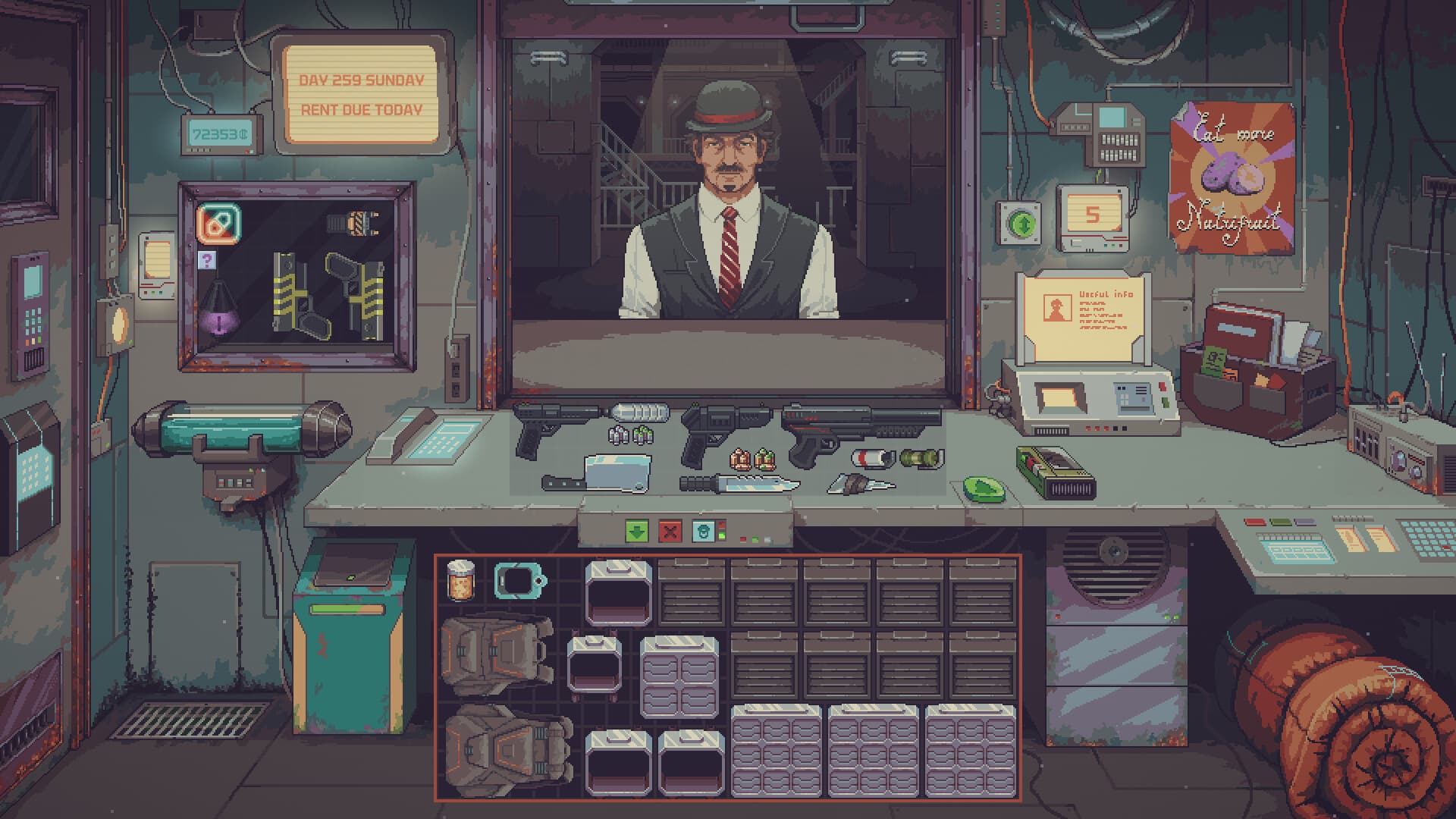
Read the order before choosing a gun
An order can specify Firepower, Style, Reliability, Recoil Control, Ergonomics, Accuracy, Size, or Suppressed. The sale depends on satisfying all of its required conditions, so a strong result in one category does not replace a missing requirement elsewhere. Use the customer's complete list as your checklist, then consider any bonus conditions separately when deciding what to supply.
The release guide separates customers by the level of firearm they request. Lower-level buyers ask for basic guns, mercenaries want mid-tier guns, and upper-level buyers request high-tier guns. That makes the buyer's requested tier another useful starting point when choosing a firearm, alongside the particular stats and other conditions written into the order.
For a “Give me your best” order, payment is the gun's market value plus 50%. Keep that premium attached to this named order type when comparing possible work. A service order follows a different arrangement: the customer supplies the gun, you fit parts, and payment covers those parts plus a service fee.
Unlock Gunsmithing and establish your supplies
Choosing Gunsmith as your starting specialization gives you a route into the trade from the beginning. If you started with another specialization, the release guide lists Retired Gunsmith as a 650-credit purchase from Wild. Mid-run trade unlocks go through Joe Wild's Network, which becomes accessible on day 7; that timing applies to the network route rather than the Gunsmith starting choice.
The listed introductory equipment includes a shabby 3D Printer, a charged cell, filament, a Screwdriver, a gun part, and mods. Both the Gunsmith start and the Retired Gunsmith starter kit are listed as supplying a single Gun Parts item. The Retired Gunsmith subsequently visits weekly with chips, filament, mods, and printer modules, giving you a recurring source of printing supplies and equipment.
Print firearms and components for the job
To set up a print, put an Energy Cell into the 3D Printer, insert the appropriate printer chip, and add the materials that chip requests. Recipes use materials such as filament, scrap metal, and metal ingots, with some components also requiring electronic parts. Printing progresses overnight, and larger jobs take more than a single night, so include production time when planning the gun or components you need.
The Liberator Pistol recipe consumes 2 filament to produce 1 pistol, while Double Liberator Pistol consumes 3 filament to produce 2 pistols. For component batches, Improved Springs uses 2 scrap metal and has a listed output of 4. The Makeshift Red Dot / Toy Laser entry instead uses 1 filament and 1 electronic part, also with a listed output of 4.
Red Dot Sight consumes 3 scrap metal and 1 electronic part for a listed output of 2, while Laser Sight uses 2 scrap metal and 1 electronic part for 2. The Suppressor recipe takes 5 scrap metal and lists an output of 2. For .22 Magazine variants, standard, high cap, and extended cost 1, 2, and 3 filament respectively, with each recipe listing an output of 2.
Build frames or refurbish existing firearms
Metal frame printing requires the CNC and Metal Printing modules. Nestfire Compact Frame consumes 1 metal ingot for 1 frame, whereas Ironcraft 10 Frame consumes 1 metal ingot plus 1 scrap metal for 1 frame. A single Gun Parts item can finish either of these frames into a firearm in New condition, linking frame production to your parts supply.
Printing Gun Part requires its corresponding printer chip, metal ingot input, and the Metal Printer and Computer Numerical Control modules, also described as Metal Printing and CNC. You can also obtain Gun Parts by disassembling a firearm with a screwdriver. Gun Parts can refurbish used firearms, and repeated refurbishment attempts increase the chance of success, giving existing weapons a separate use alongside assembling freshly printed frames.
Keep the metal supply moving
Smelting supplies Gunsmithing by converting scrap metal and ore into Metal Ingots. Dr. Jackson gives you a Furnace for free on day 6, making this a material-production route you can establish before the network opens. Afterward, he continues stocking a Furnace, the Metallurgy Manual, and furnace modules, so the initial gift is not the only listed source of that equipment.
Load an Energy Cell into the Furnace, which uses 8 power per night. Add two Scrap Metal, two Metal Ore, or one of each, optionally include a Flux Smelting Agent, and leave the batch overnight to obtain one Metal Ingot. This connects your scrap or ore stock to the ingots used in frame and Gun Part printing.
For ore, Caulson at GP Mining Coop is available through Wild's 250-credit introduction. Scrap Metal comes from the Dumping Ground and scrap sellers, providing a separate supply route for recipes that use scrap directly. The Furnace's Junk Processing module offers another conversion, turning six Junk into four Scrap Metal, which can support scrap-consuming prints or feed your ingot production.
Match weapon permits to your stock
Weapon Permit I costs 300 credits, is delivered at 20 Security reputation, and covers low-level firearms and ammunition. Weapon Permit II costs 600 credits, requires 50 Security reputation for delivery, and covers mid-level firearms and ammunition. Weapon Permit III costs 900 credits, is delivered at 80 Security reputation, and covers high-level firearms and ammunition.
The revocation thresholds differ from the reputation needed to receive each permit. Permit I is revoked below 0 Security reputation, Permit II below 30, and Permit III below 60. Keep reputation above the relevant revocation line to retain your permit, since an officer can take it away and the game's official description associates weapons trading with inspections.
Guns covered by the appropriate permit stop counting as contraband and retain half the usual contraband markup. That rule concerns the markup rather than halving the firearm's total sale price. Additional permits also make the Retired Gunsmith more likely to bring rare chips and modules on his weekly visits, although the improved chance does not guarantee that stock.